This is the most common decision our customers face, and most of the advice online is written by someone selling one of the two. So here's the version from a crew that installs both and gets called back to repair both.
Neither material is simply better. They fail differently, they cost differently over time, and Kentucky's freeze-thaw cycle treats them differently. The right answer depends mostly on how long you intend to own the property and how you feel about maintenance.
The short version
| Wood | Vinyl | |
|---|---|---|
| Up-front cost | Lower | Higher |
| Maintenance | Stain or seal every 2–4 years | Wash occasionally |
| Realistic lifespan | 15–25 years (cedar, well maintained) | 25–35+ years |
| Repairability | Excellent — replace a single picket | Harder — usually a whole panel or section |
| Looks over time | Weathers and silvers; can be refinished | Stays consistent; can't change color |
| Impact resistance | Dents and splits, stays standing | Can crack in hard cold impacts |
| Best fit | Character, budget, DIY-friendly repairs | Set-and-forget, long ownership |
How wood actually fails in Kentucky
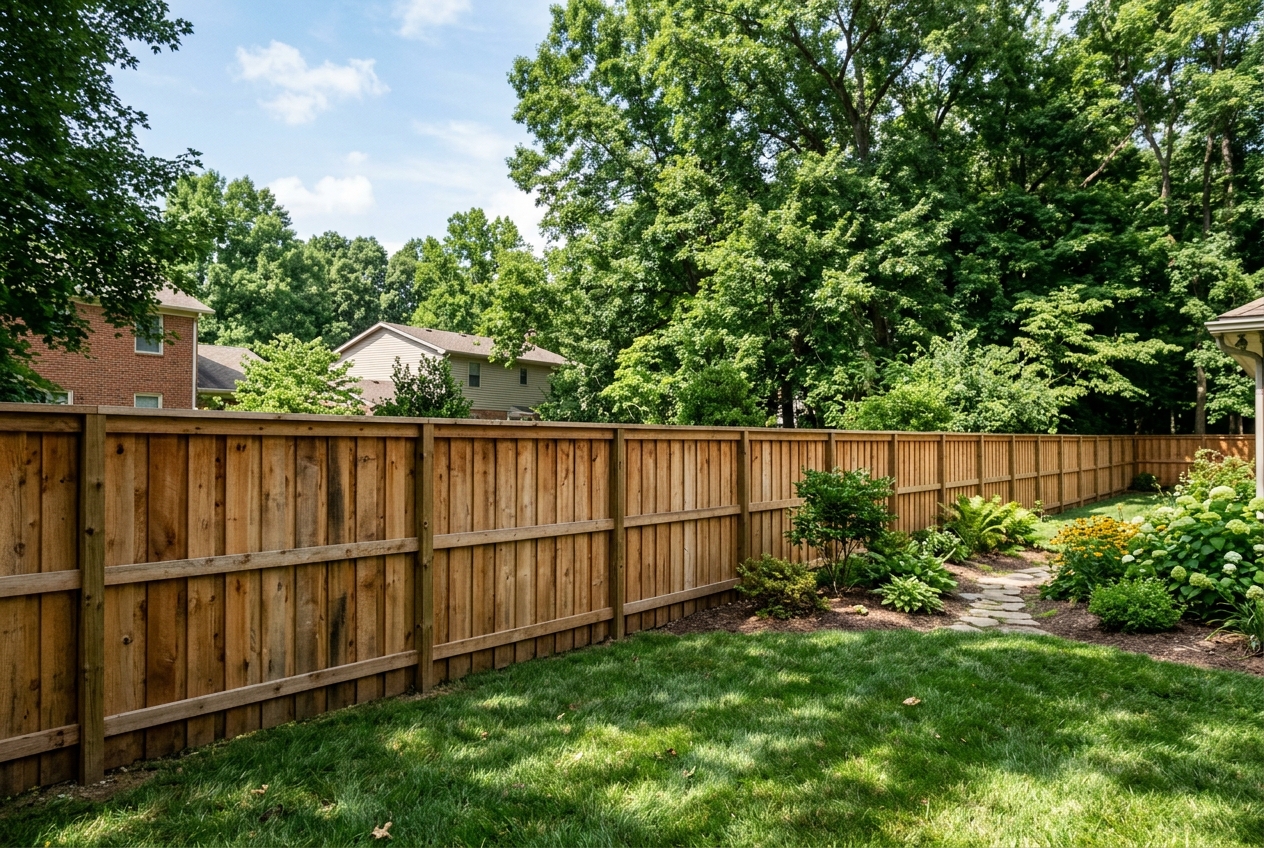
Wood fences here rarely fail all at once. They fail at the post, at ground level, where moisture and soil contact meet. Our humid summers and wet winters push rot at the base long before the pickets give out, which is why a 12-year-old fence can have perfectly sound boards and three posts you can push over by hand.
That's also why post material and setting method matter more than picket grade. A cedar fence on undersized, shallow-set wood posts will disappoint you. The same cedar on properly sized steel or heavy treated posts set below the frost line is a different product entirely.
- Pressure-treated pine: lowest cost, 12–18 years typical, needs the most upkeep, prone to warping and twisting as it dries.
- Western red cedar: naturally rot and insect resistant, holds a straighter line, 18–25 years when maintained, the usual choice when appearance matters.
- Board-on-board and shadowbox: overlapping boards hide the gaps that open as wood shrinks, so the fence still looks solid in year five.
Maintenance is the real commitment. Stain or seal every two to four years in our climate. Skip it for a decade and you've effectively chosen a shorter fence life.
How vinyl actually fails in Kentucky
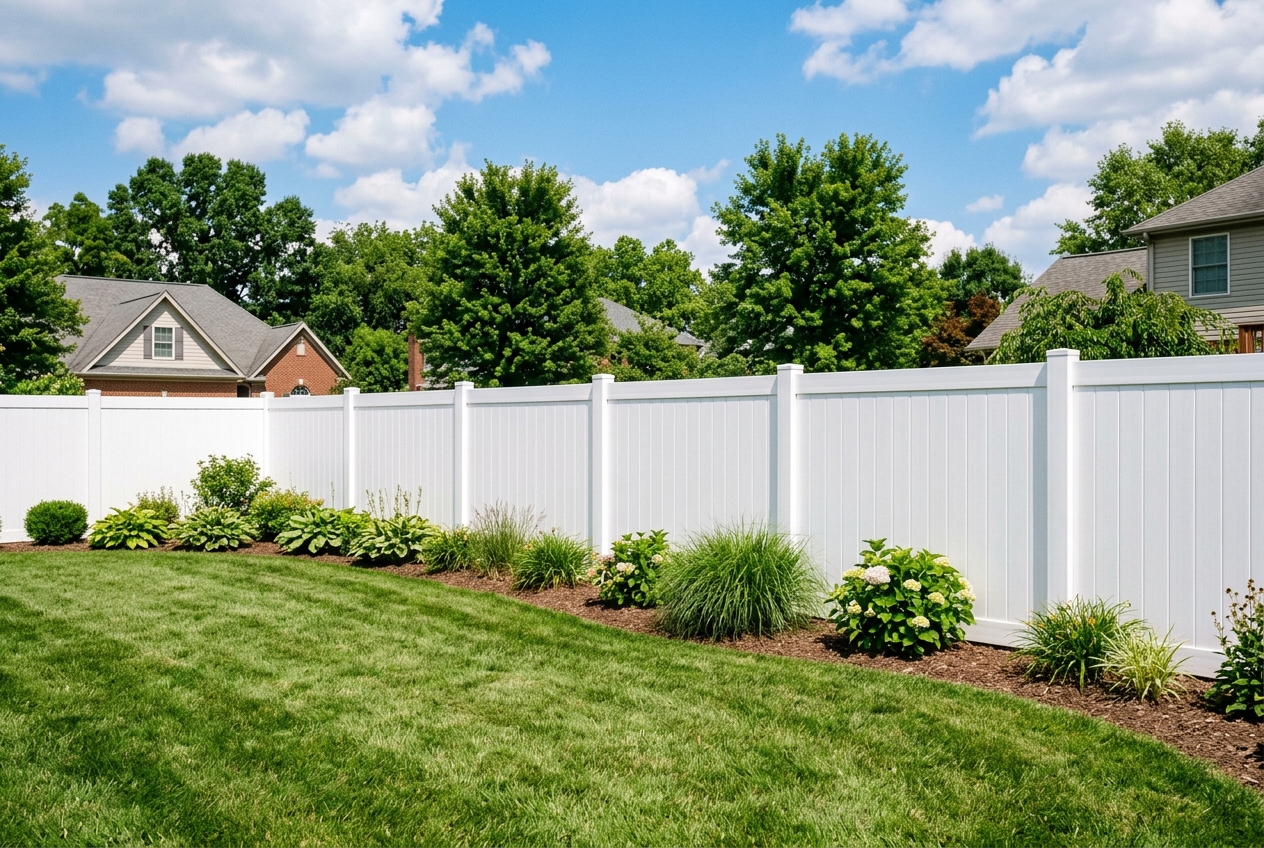
Vinyl doesn't rot, doesn't need staining, and doesn't get eaten by insects. Its failure modes are different: impact in deep cold, and quality of the extrusion.
Cheap, thin vinyl gets brittle in January. A riding mower deck, a thrown ball, or a falling limb that would dent a wood board can crack a thin vinyl panel. Good vinyl — thicker wall, UV inhibitors, internal aluminum reinforcement in rails and gate posts — handles our winters without drama. The spread in vinyl quality is much wider than most buyers realize, and it's not visible from the curb on install day.
The other honest drawback: repair. Wood lets you swap one picket for a few dollars. Vinyl usually means replacing a whole panel or rail section, and if the product line has been discontinued, matching an older color can be genuinely difficult.
Cost over twenty years, not on install day
Vinyl's higher first cost is the most common reason people rule it out, and the comparison looks different once you run it over the life of the fence. Take a 150-foot back yard:
- Wood: lower install cost, then staining every three years. Over 20 years that's six or seven maintenance cycles in materials and either labor or your weekends — plus likely post repairs somewhere in year 12 to 15.
- Vinyl: higher install cost, then essentially washing. Over 20 years, close to nothing added.
Run honestly, the two often land in a similar range over two decades. Which means the decision isn't really financial — it's about whether you'd rather pay now or maintain later, and whether you'll still own the house long enough for it to matter.
How to choose
Choose wood if you want the warmer look, a lower cost to get in the ground, the flexibility to stain it a different color later, and cheap spot repairs. Choose wood if you might move within five to seven years.
Choose vinyl if you genuinely don't want to think about the fence again, you're staying long term, you want a bright white or tan that stays that way, and the higher first cost is workable.