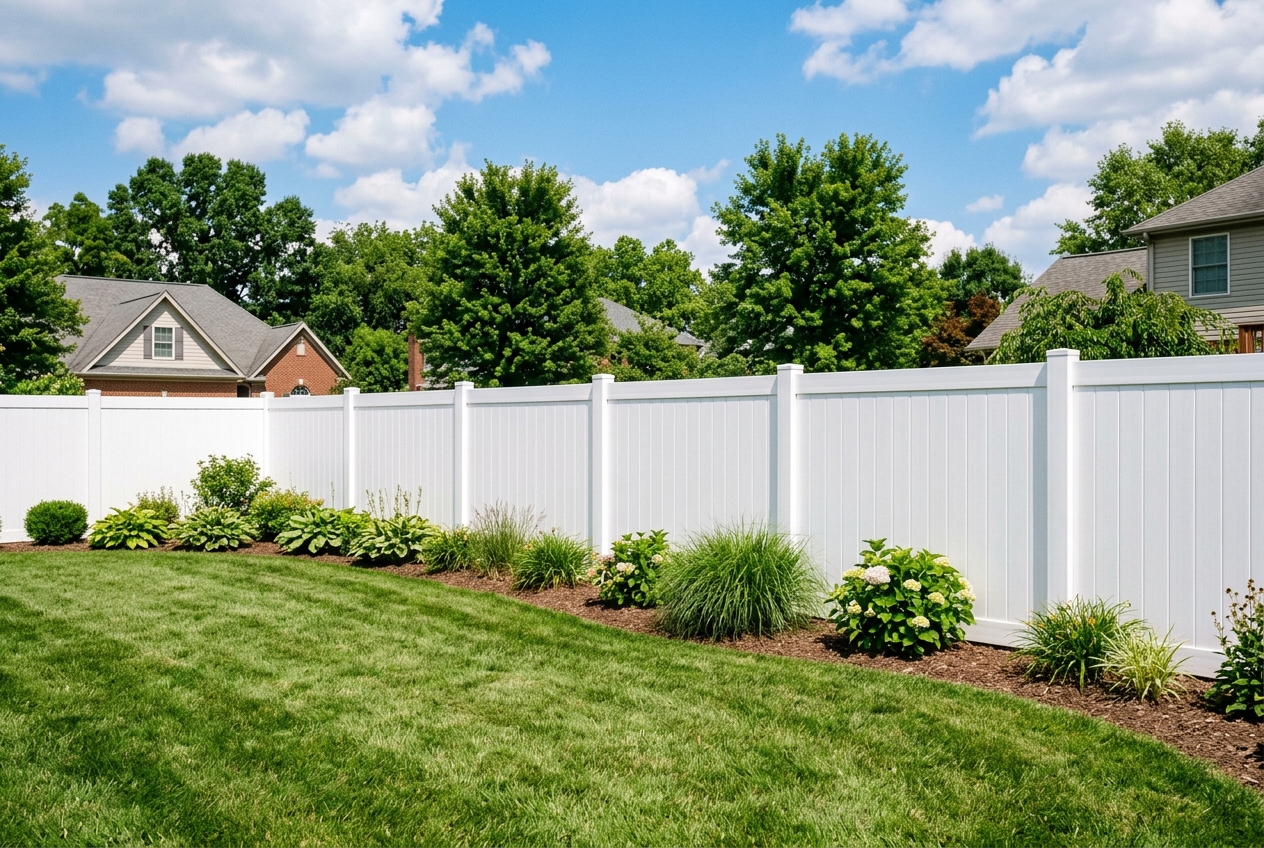
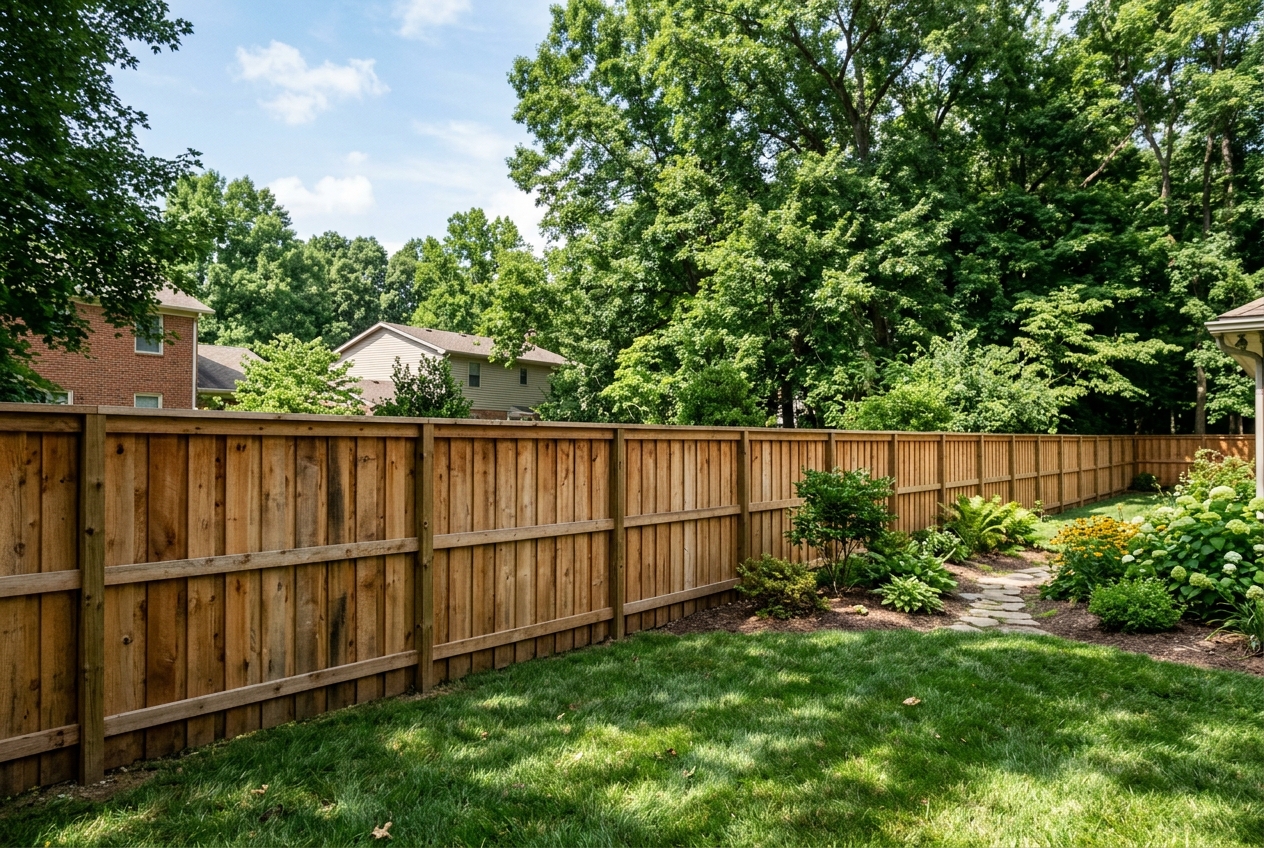
If you live in a subdivision built in the last thirty years anywhere around Lexington, Georgetown, Nicholasville, or Richmond, there's a good chance your fence has two approvals to clear: the city and your homeowners association. The HOA is usually the stricter of the two, and it's the one people forget until materials are already ordered.
Here's how to get through it without a delay or a redo.
Start with the covenants, before the quote
Your declaration of covenants, conditions, and restrictions — the CC&Rs — is the controlling document. You should have received it at closing; if not, the HOA or management company can provide it, and it's often recorded with the county clerk.
Read the architectural section specifically. The restrictions we run into most often in Central Kentucky subdivisions:
- Approved materials only — commonly wood or black aluminum, with vinyl and chain link prohibited outright.
- A maximum height lower than the city allows, frequently 4 or 6 feet even where zoning would permit 8.
- A required style, such as shadowbox or board-on-board, or a prohibition on solid privacy fence entirely.
- Color restrictions, including natural stain only or a specified black for metal.
- Placement rules, such as no fencing forward of the rear corner of the house.
- A requirement that fencing match adjacent neighbors' fences.
How to submit so it gets approved the first time
Architectural review committees reject vague submittals. The ones that sail through include everything the committee needs to picture the finished fence:
- 1A plot plan with the proposed fence line drawn on it, including gate locations.
- 2Height, material, and style named explicitly — 'six-foot western red cedar board-on-board,' not 'wood privacy fence.'
- 3A product photo or a photo of a comparable fence already in the neighborhood.
- 4Stain or color, if applicable.
- 5The contractor's name, along with proof of license and insurance if requested.
Build in time. Review cycles run from a few days to a few weeks depending on how often the committee meets. We'd rather wait on paperwork than install something that has to come back out, so we schedule around your approval.
Easements: the restriction with no appeal
An HOA might grant a variance. A utility easement will not. Utilities have a legal right to access their equipment, and if your fence is in the way, they can remove it to get to a line and are not obliged to rebuild it.
Drainage easements are the other frequent one, especially on lots backing up to a detention basin or a creek. Fencing across a drainage easement can be prohibited outright, or restricted to a style that lets water pass.
Your plat shows recorded easements. We check this during the estimate and route the fence line around them, or tell you plainly that the line you want isn't available.
Corner lots and sight lines
Corner lots carry extra rules so a fence doesn't blind drivers at an intersection. In Lexington, a side yard abutting a street is limited to 4 feet when it's within 3 feet of the right-of-way, and 6 feet when it's farther back — so the exact distance from the line changes what you're allowed to build.
Sight triangle requirements at driveways and intersections can restrict height further. If you're on a corner, this is worth confirming for your specific lot rather than assuming the back yard rule applies.
Talk to your neighbor first
Not a legal requirement, just experience. A fence on a shared line affects someone else's view every day for the next twenty years, and a five-minute conversation before the posts go in prevents most disputes.
It also occasionally saves money. Neighbors who both want fence sometimes split a shared run, and if you do, put the arrangement in writing — Kentucky allows adjoining owners to record a written division fence agreement with the county clerk, which then carries the legal effect of a deed.