
A fence that contains a Labrador will not contain a husky, and a fence that stops a climber does nothing about a digger. Dog containment is the single most common reason people call us, and it's also where we see the most fences that technically got built correctly and still failed.
Here's how to think about it before you spend the money.
Height: match the dog, not the average
| Dog profile | Recommended height |
|---|---|
| Small breeds, low drive | 4 feet |
| Most medium and large breeds | 5–6 feet |
| Athletic jumpers and climbers (huskies, shepherds, pit mixes, cattle dogs) | 6 feet minimum, solid-face |
| Known escape artists | 6 feet, no horizontal footholds, consider an inward top |
A critical detail: climbers use horizontal rails as a ladder. On a fence built with rails on the inside, a determined dog has a staircase. For climbing breeds we put the smooth face inward, so there's nothing to push off. This is one of those decisions that costs nothing extra at build time and is nearly impossible to retrofit.
The bottom gap is where fences actually fail
Almost every escape we're called to fix happens in the first four inches above the dirt. Fence panels are typically set with a small gap at the bottom so wood isn't sitting in soil — good for the fence, an open invitation for a dog.
Ground also isn't flat. A fence that looks tight on install day develops gaps wherever the grade dips, and a dog finds the low spot within a week.
Ways to close it, roughly in order of cost:
- 1Follow the grade. Racking the fence to the contour instead of stepping it down eliminates the triangular gaps under each stepped panel. More labor, dramatically fewer holes.
- 2Rot board (kick board). A wide treated board along the bottom closes the gap, takes the abuse instead of your pickets, and keeps mulch and soil off the fence. This is our default recommendation for dog owners.
- 3Buried wire apron. Galvanized mesh fastened to the bottom and turned outward in an L under the sod. A digger hits wire instead of open soil and gives up. Nearly invisible once grass grows in.
- 4Concrete or paver trench. The permanent answer for serious diggers, and the most expensive.
Material by behavior
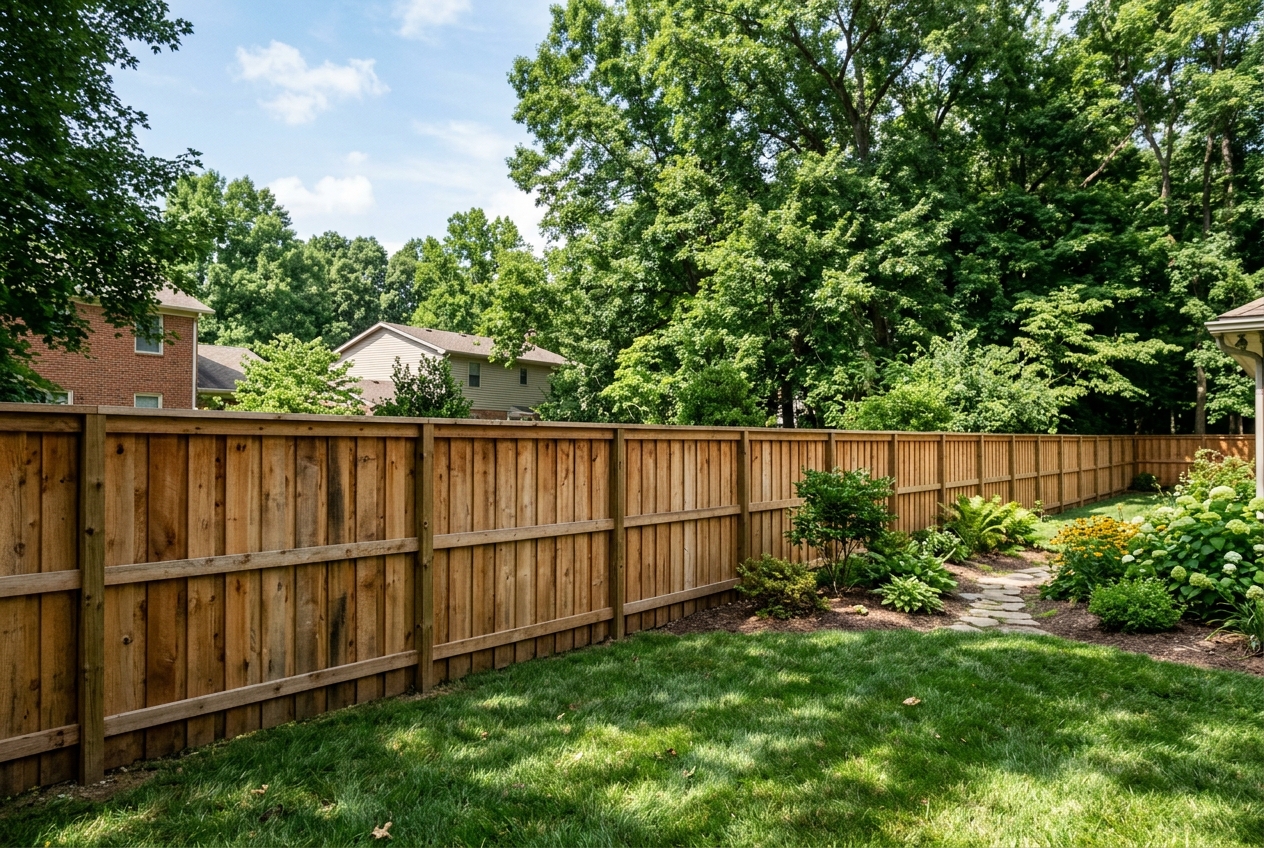
- Wood privacy: our usual pick. Solid face removes visual triggers, no footholds, and a damaged picket is a cheap swap. Chewers can work on a bottom board, which a rot board handles.
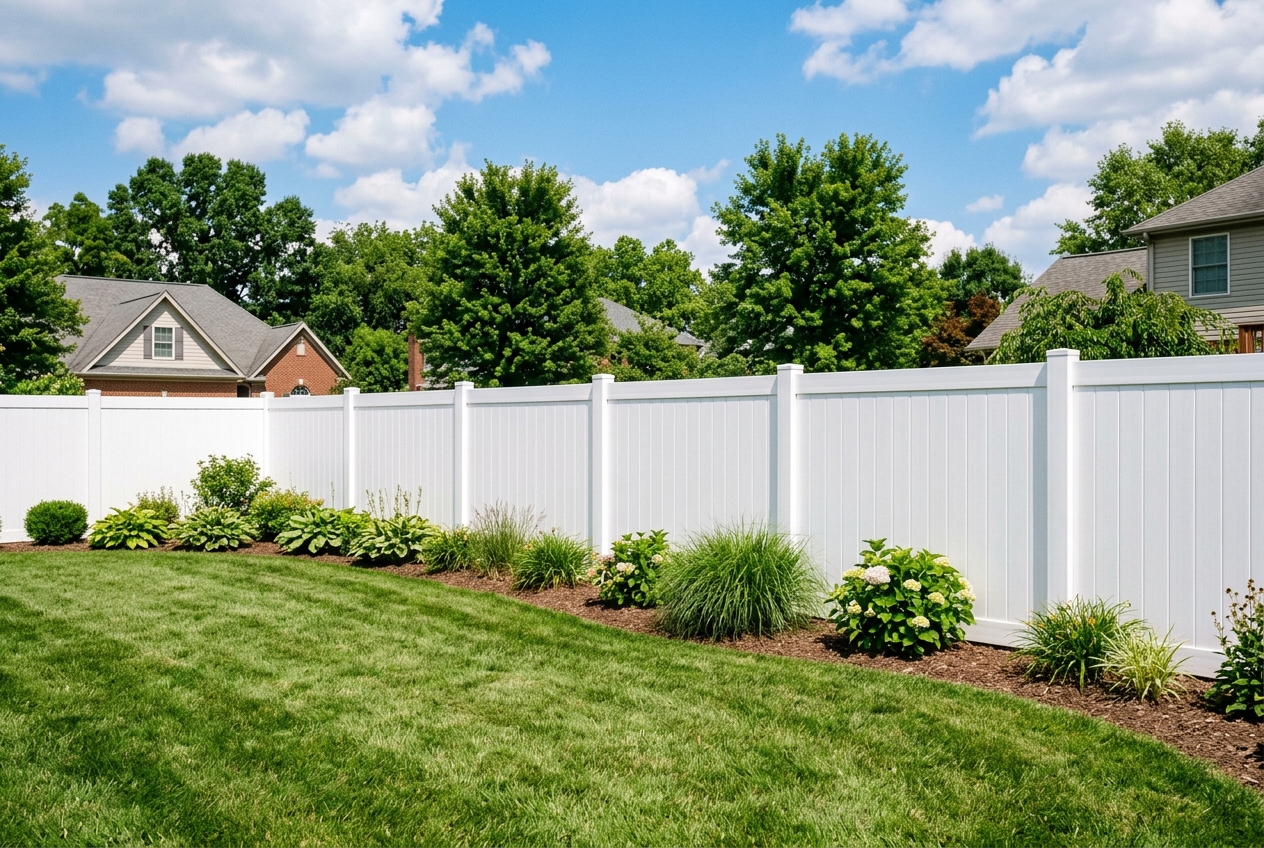
- Vinyl privacy: smooth, nothing to grip, nothing to chew through. Panels can crack from heavy repeated impact from a very large dog, so wall thickness matters.
- Chain link: durable and economical, but it's a ladder for climbers and the bottom lifts unless it's tensioned well. Best for dogs that don't climb. A tension wire or bottom rail is essential.
- Aluminum ornamental: looks great and is very strong, but pickets are spaced. Check that spacing against your dog's head size, and remember that a slim dog can get through a surprisingly narrow gap.
One more behavioral note: reactive dogs that bark at everything passing by usually do better behind a solid fence than a see-through one. Removing the trigger removes a lot of the behavior, and a calmer dog tests the fence less.
Gates are the weak point
More dogs get out through gates than over fences. Gates sag, latches get bumped, and a gate left ajar is a gate that doesn't count.
- Self-closing hinges and a self-latching latch, so a gate left swinging still closes and catches.
- A latch mounted high and on the outside, out of reach of both the dog and small children.
- A drop rod on double gates, so the leaf can't be pushed open.
- A properly braced gate frame, because a sagging gate stops latching and that's when the dog learns.