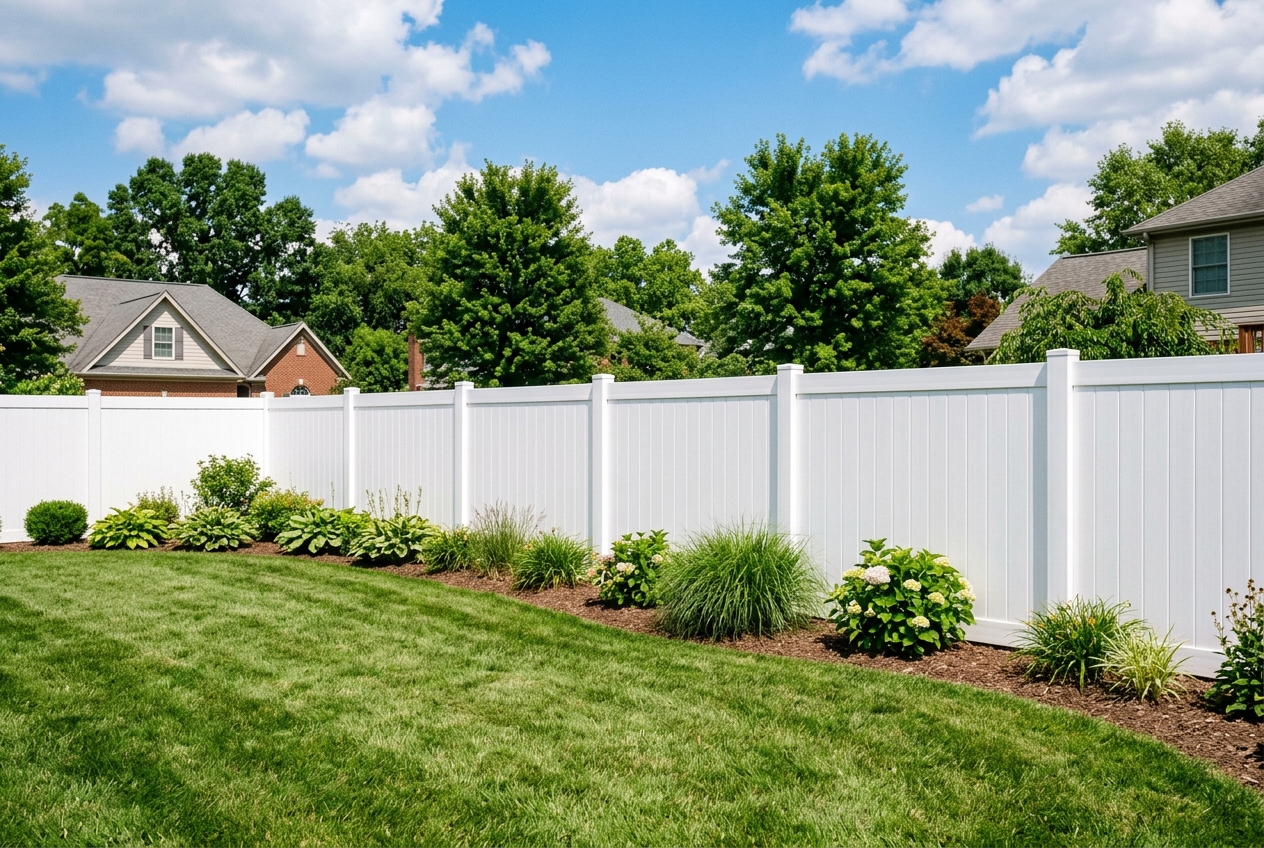
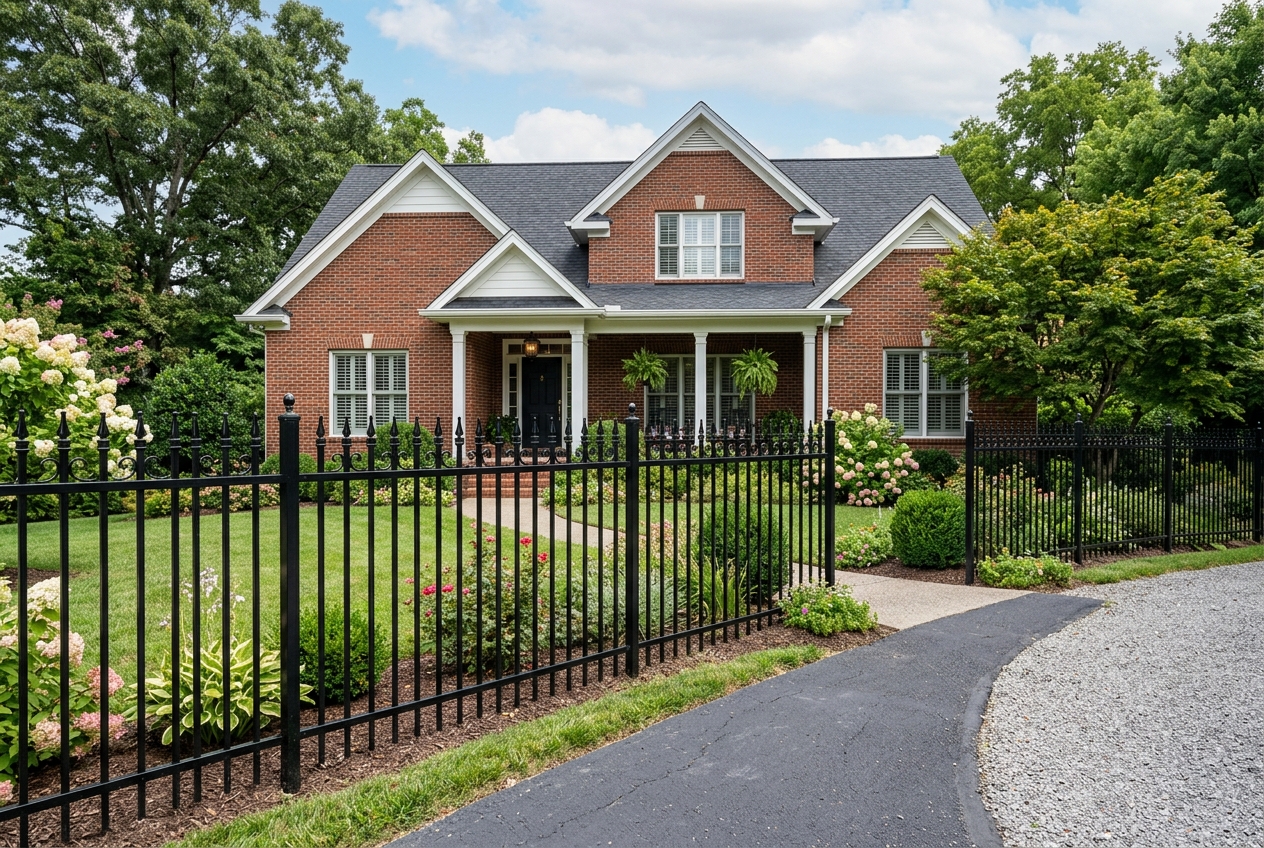
Kentucky doesn't have one statewide pool fence law. Pool barrier requirements are set by local building codes, so the exact rule depends on whether you're inside Lexington-Fayette, Georgetown, Nicholasville, or another jurisdiction. That said, nearly every Central Kentucky city builds its ordinance on the same model code, so the baseline below holds in the large majority of cases.
Confirm with your local building inspection office before you order materials — it's a five-minute call, and getting it wrong means rebuilding a installed fence.
The baseline almost every jurisdiction uses
Most Central Kentucky cities base their pool ordinance on the same residential barrier standard. For any pool with water deeper than 24 inches, the common requirements are:
- A continuous barrier at least 48 inches tall, with no gaps or climbable features.
- Gates that are self-closing and self-latching.
- If the latch release is lower than 54 inches from the bottom of the gate, it must sit on the pool side, at least 3 inches below the top of the gate — out of a small child's reach from outside the enclosure.
- No opening in or under the barrier large enough for a 4-inch sphere to pass through — the standard test for whether a small child could squeeze under or between elements.
- Chain-link fencing, if used, with mesh no larger than 1.75 inches, since standard chain-link diamond mesh can otherwise be used as a climbing ladder.
Above-ground pools get their own allowance
In many jurisdictions, an above-ground pool's own wall can serve as the required barrier, provided the wall is at least 48 inches tall and the access ladder or steps are removable, locked, or gated when the pool isn't in use. That doesn't remove the requirement for a perimeter barrier if the yard itself isn't otherwise secured — check your specific ordinance.
Why 'it meets code' still needs a local check
Because these rules live in local ordinance rather than state law, specifics can shift between cities — some add alarm requirements on doors and windows with direct pool access, some have different rules for pools already enclosed by a house wall on one side. We build to whichever ordinance applies to your address, and we check it rather than assume the Lexington rule applies in Georgetown, or vice versa.
Where no pool exists yet, this is also worth folding into the fence conversation early — an ornamental fence sized and spaced for pool compliance from day one is cheaper than retrofitting a residential fence to meet barrier code after the pool is installed.