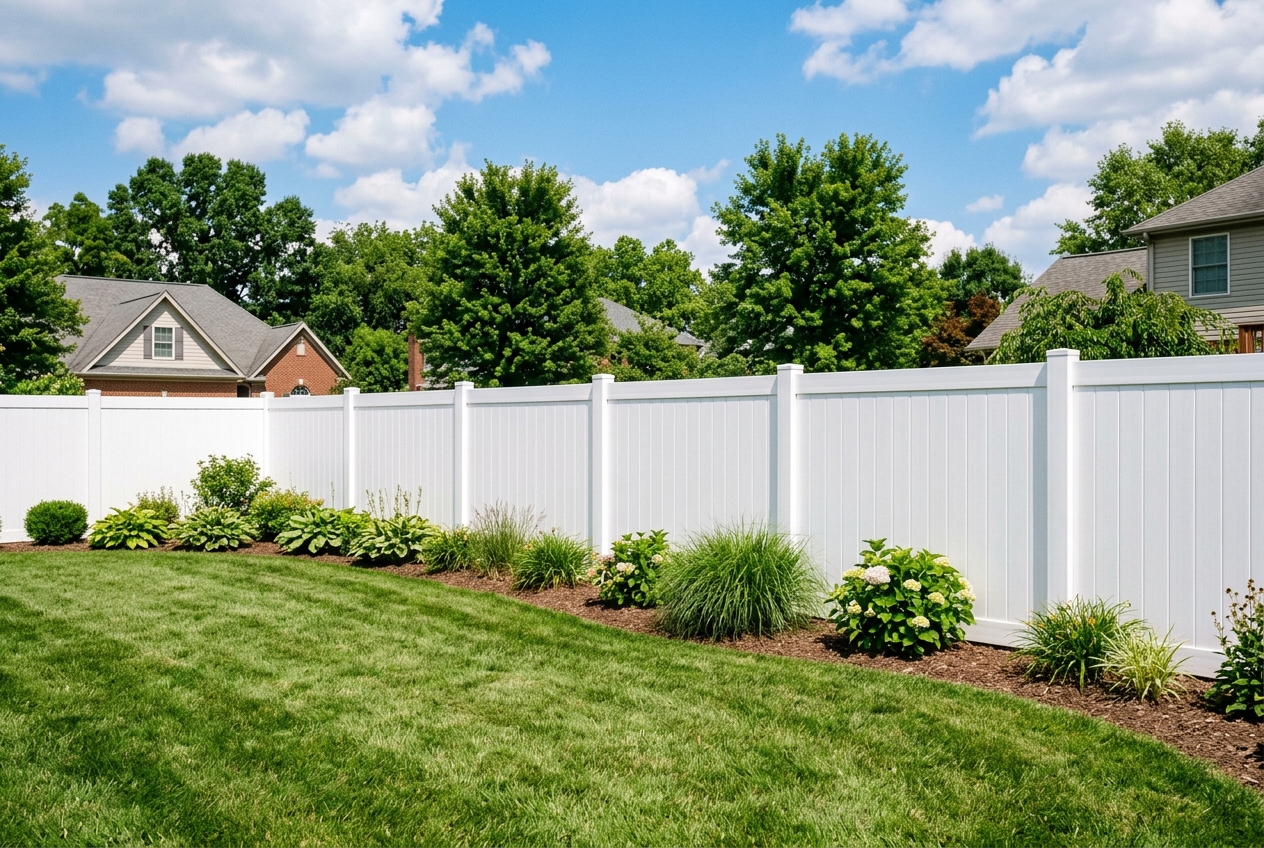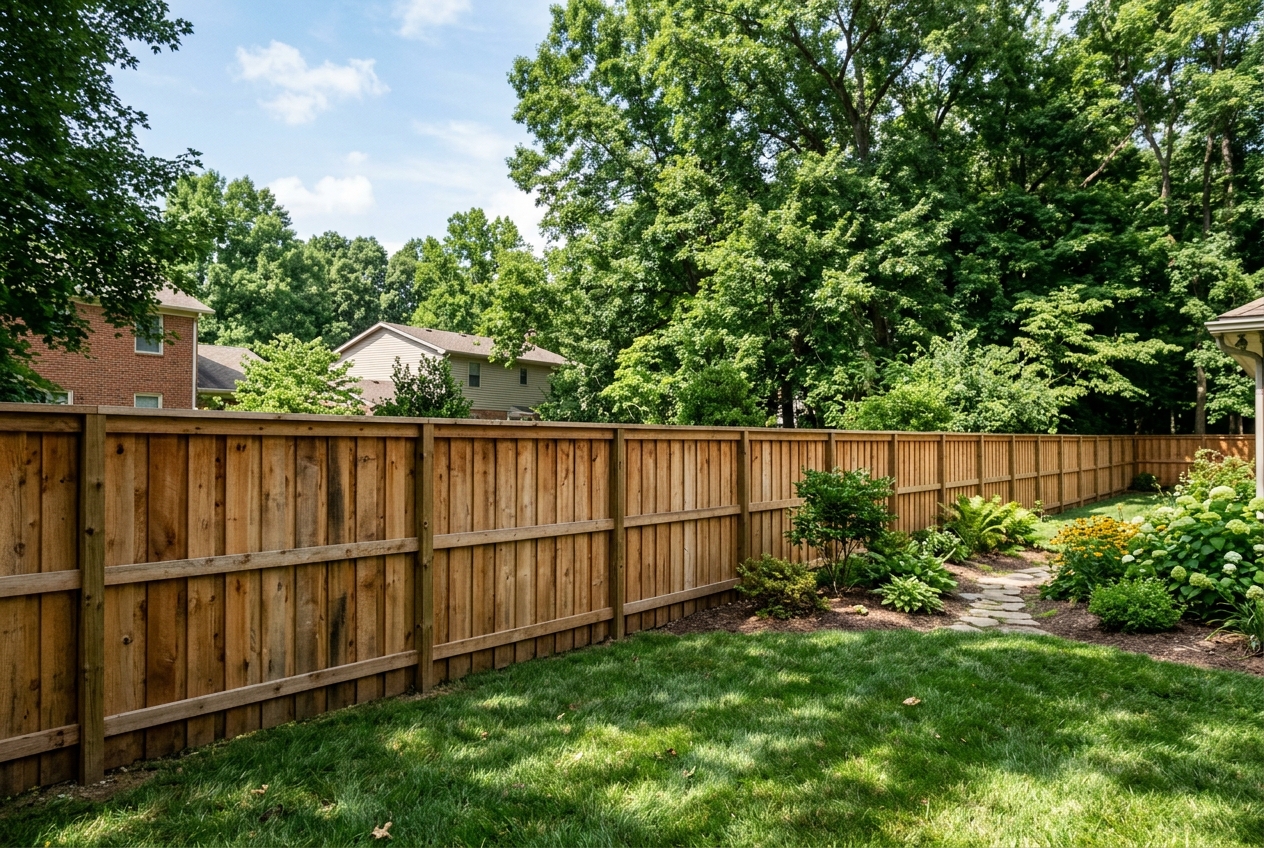

Fence rules in Lexington-Fayette County trip up a lot of homeowners, mostly because the height you're allowed depends less on your property line and more on where the fence sits relative to the front wall of your house. Get that part wrong and you can be asked to take a finished fence down.
This is a plain-English summary of how it works. It is not legal advice, and ordinances change — always confirm your specific lot with LFUCG before you build. We handle this step for our customers as part of the job.
When a permit is required
In Lexington-Fayette County, fences and walls 24 inches or higher above grade require a permit from the Division of Building Inspection. That's a low threshold — it means essentially every real fence needs one, including a 4-foot picket.
Fence regulations themselves live in Section 15-4 of the Zoning Ordinance. The permit is generally inexpensive and quick relative to the job, and it is not something worth skipping: an unpermitted fence can surface during a sale, a neighbor complaint, or an insurance claim.
Height limits depend on position, not just the property line
This is the part that surprises people. In residential and office zones, the limit is set by where the fence falls relative to the front plane of your building:
| Location of fence | Maximum height |
|---|---|
| Between the street right-of-way and the front plane of the house (front yard) | 4 feet |
| Behind the front plane of the house (side and rear yards) | 8 feet |
| Side yard abutting a street, within 3 feet of the right-of-way | 4 feet |
| Side yard abutting a street, more than 3 feet from the right-of-way | 6 feet |
| Property abutting an alley | 8 feet |
There are additional allowances — for example, double-frontage lots abutting an arterial or collector street where driveway access is prohibited can go to 8 feet. B-2 style business zones allow 6 feet in the front yard, and agricultural, B-4, and industrial zones have no height limit at all. If your lot is unusual, it's worth a specific check rather than an assumption.
The good side faces out
Where a fence is adjacent to a public street, a park, or other public property, Lexington requires the structural members — the posts and rails — to face inward toward the owner's property. In other words, the neighbors and the public get the finished side.
This is one reason board-on-board and shadowbox styles are popular here: both sides look finished, so the rule stops being a compromise. A picture-frame build does the same thing by trimming the panel so no framing shows from either side.
What's not allowed
- Barbed wire and electric fences are prohibited in residential and mobile home park zones.
- A fence cannot encroach into an easement or a right-of-way, and it must sit entirely on your own property.
- H-1 historic district and ND-1 neighborhood design overlays can impose additional height and design restrictions on top of the base rules. If you're in a historic district, assume there's an extra review step.
Call Kentucky 811 before anyone digs
This one is state law, not a courtesy. Kentucky law requires anyone excavating — including digging fence post holes — to contact Kentucky 811 at least two full working days, and no more than ten full working days, before starting. A working day excludes weekends and state or federal holidays.
- Submit a locate request by calling 811 or 800-752-6007, or through the Kentucky 811 online portal.
- Mark your proposed dig area with white paint, flags, or stakes before locators arrive.
- Utility operators then have two full working days to mark their lines. Locate requests stay valid for 21 calendar days.
- Marks are approximate — the actual line can be up to 24 inches to either side. Inside that tolerance zone you hand-dig.
- Privately owned lines on your property, like a gas run to a pool heater or a landscape lighting circuit, usually aren't covered by a standard locate. A private locating service may be needed.
Your HOA is a separate approval
A city permit and an HOA approval are two different things, and the HOA is often stricter. Many Central Kentucky subdivisions — especially newer developments around Hamburg, Brighton East, and the Beaumont area — specify allowed materials, maximum height, color, and sometimes a required style.
Submit to your architectural review committee before material is ordered. Approval timelines run from a few days to a few weeks, and a fence that violates covenants can be required to come down at your expense even with a valid city permit.